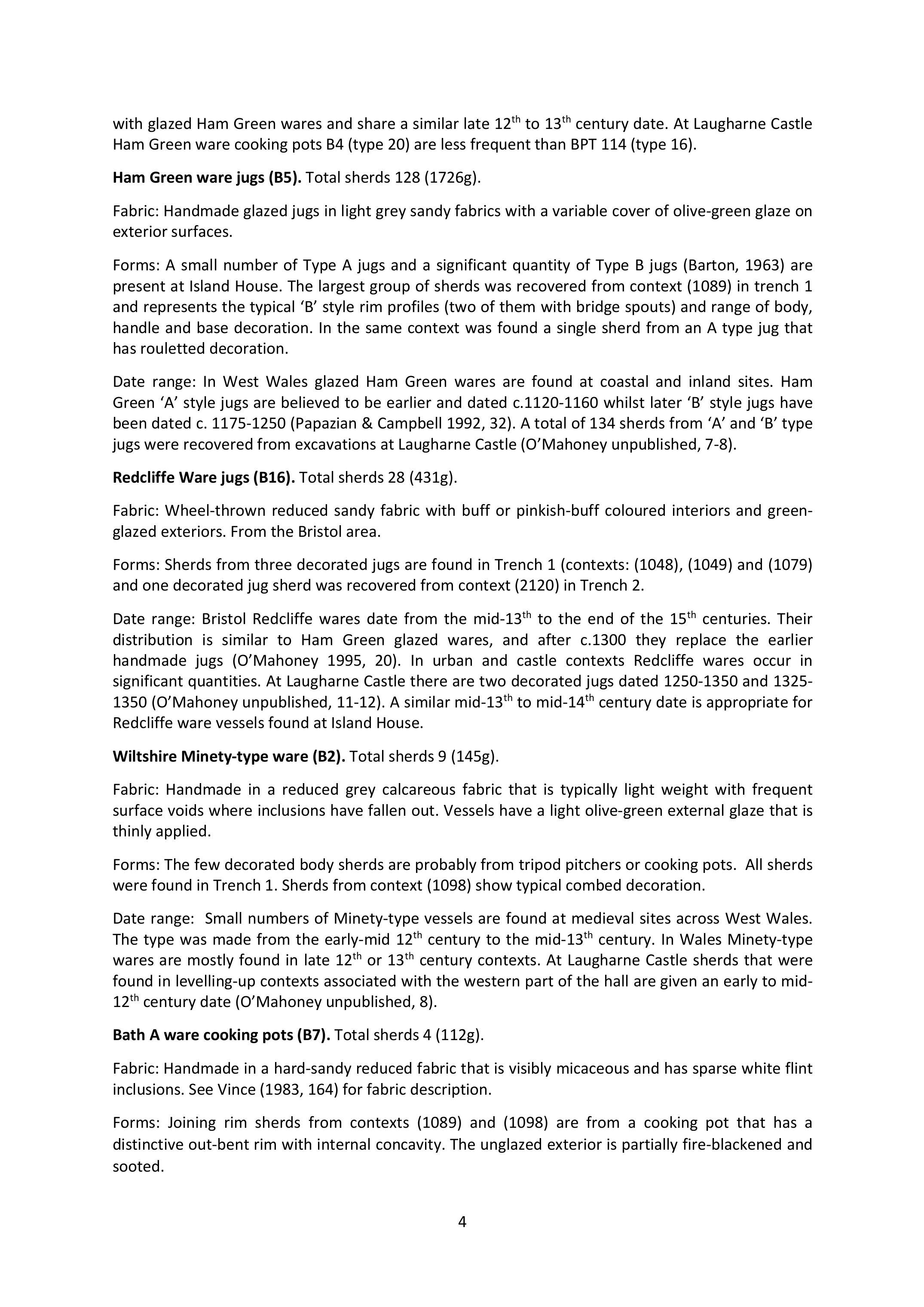
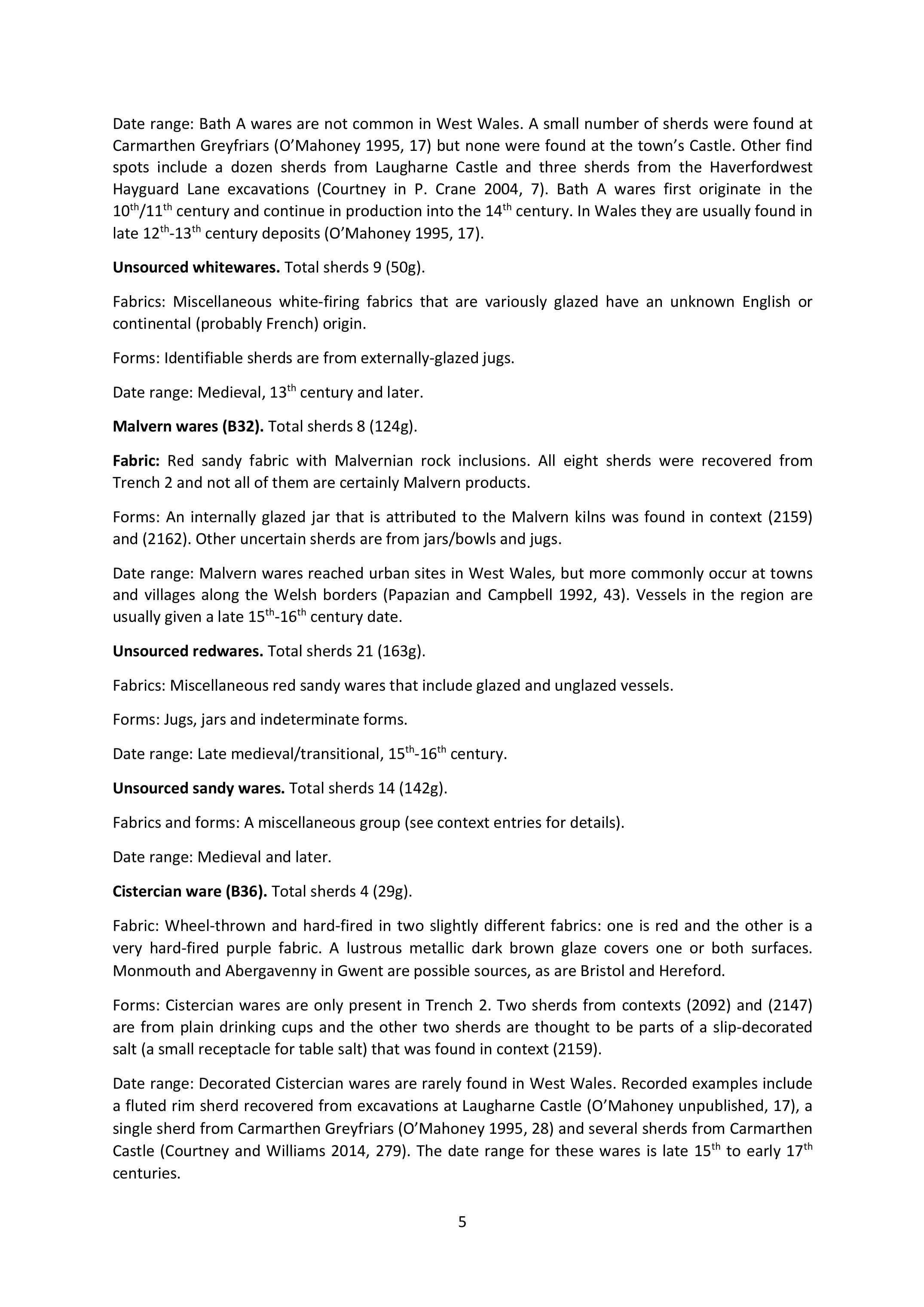
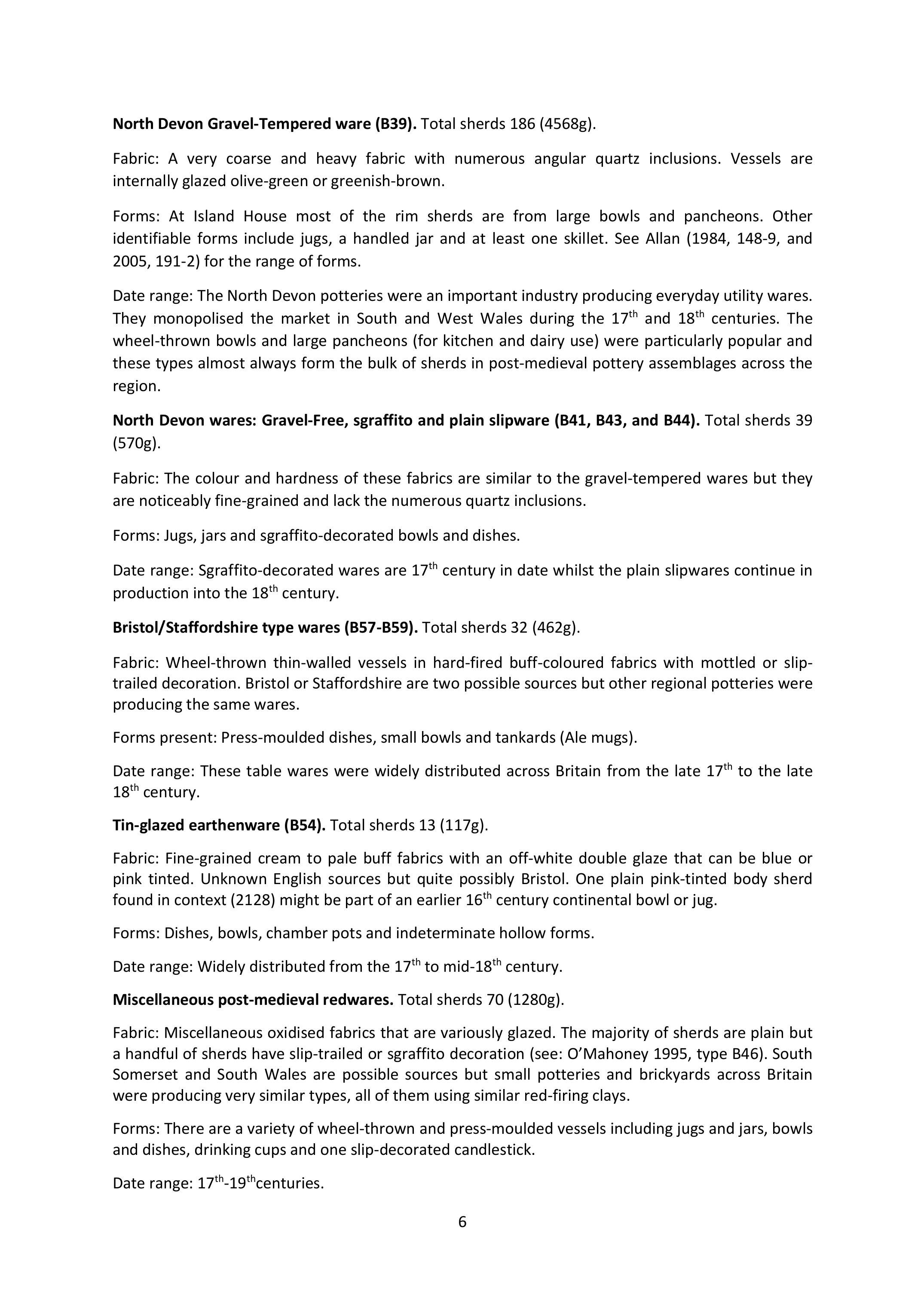
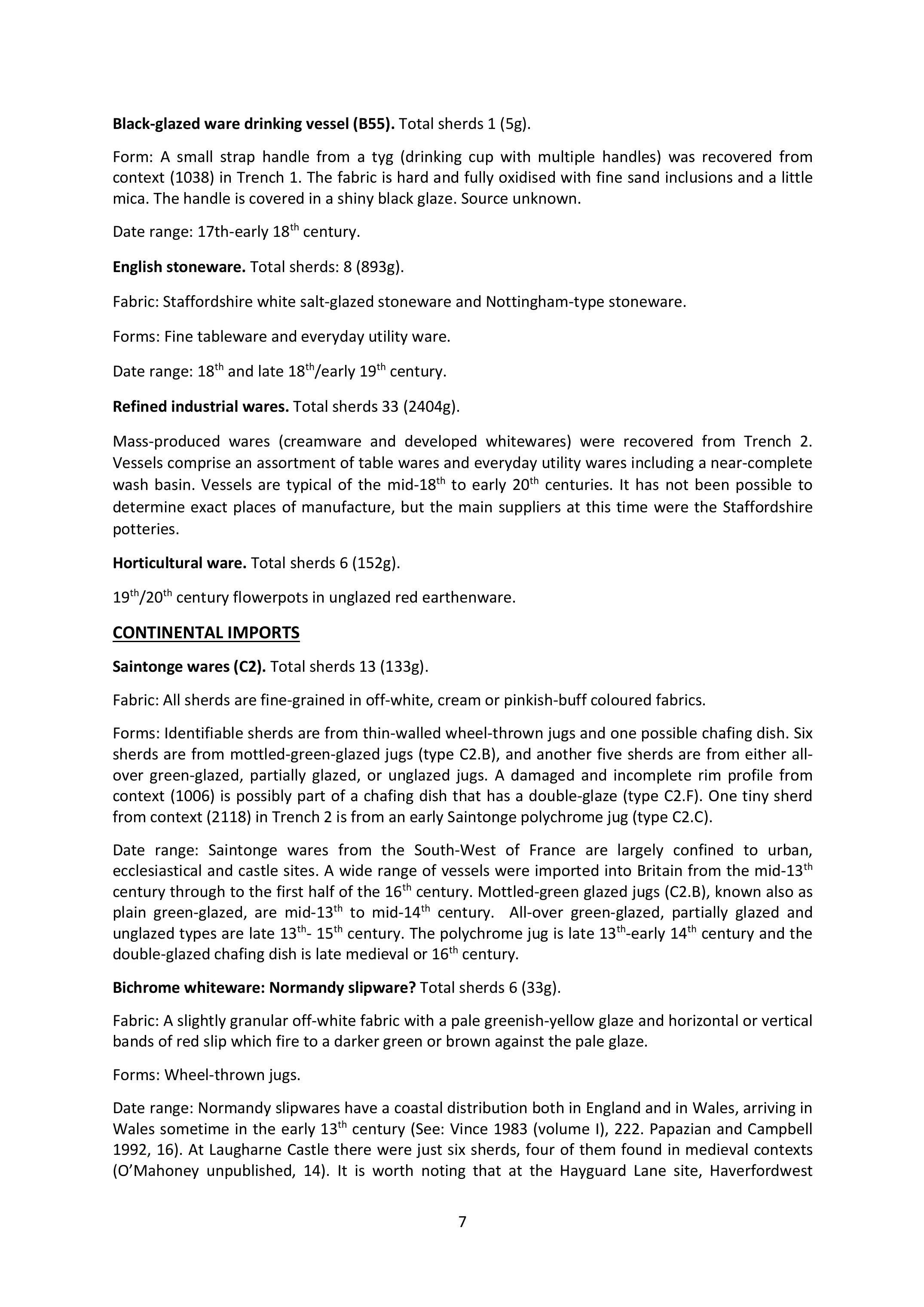
These are the 2020 interim reports. Heneb’s analysis of the 2020 and 2025 excavations has since revised their interpretation, and the final report is being prepared. Read them as a record of the first season, not the current account.
The Ceramic Finds: the 2020 excavations at Island House, Laugharne. Dyfed Archaeological Trust interim report, 25 January 2021.
What this report tells us
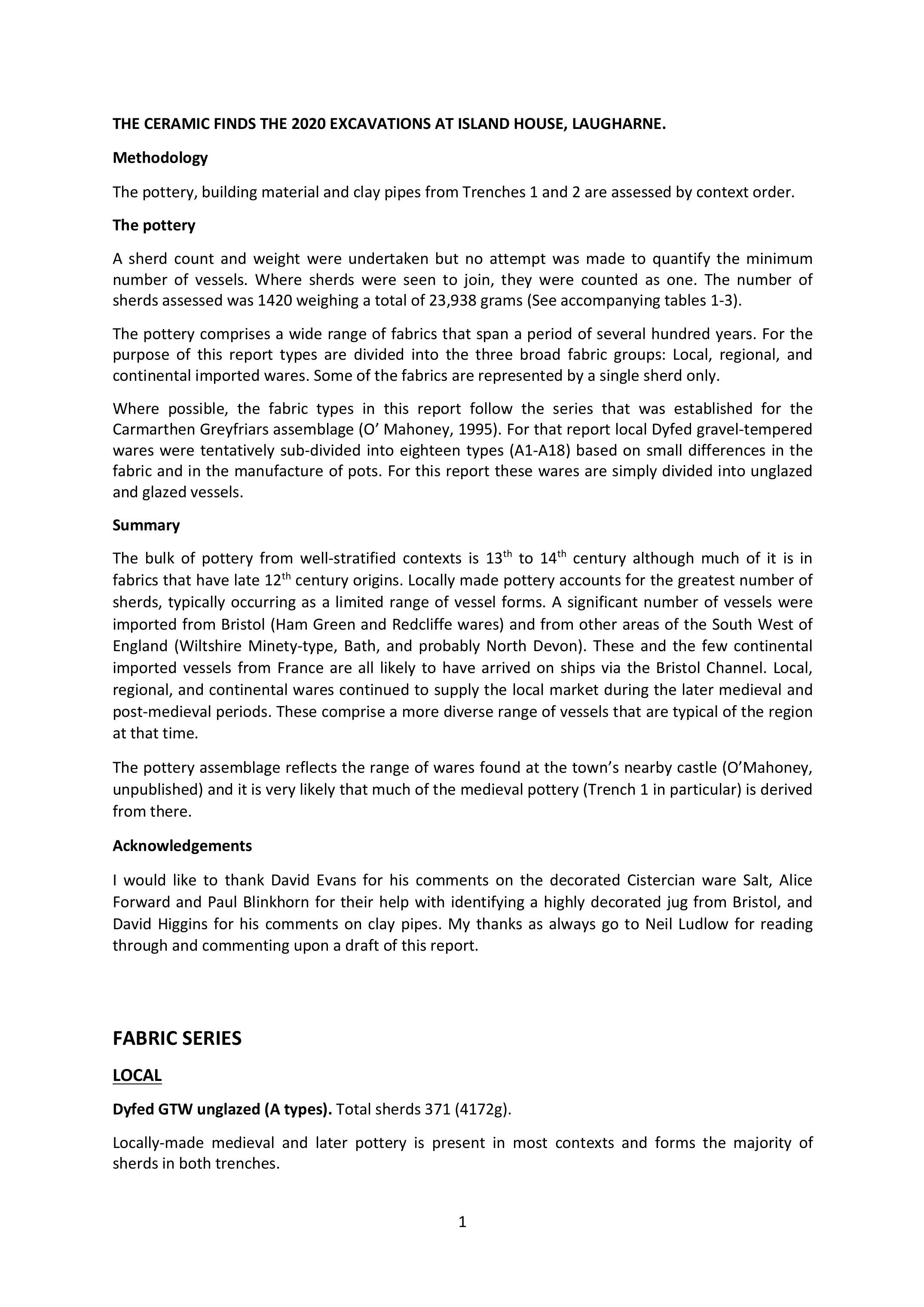
The archaeologists counted and weighed every piece of broken pottery from the two 2020 trenches: 1,420 pieces (“sherds”), about 24 kilograms in all.
Most of the pottery from the undisturbed layers dates from the 1200s and 1300s.
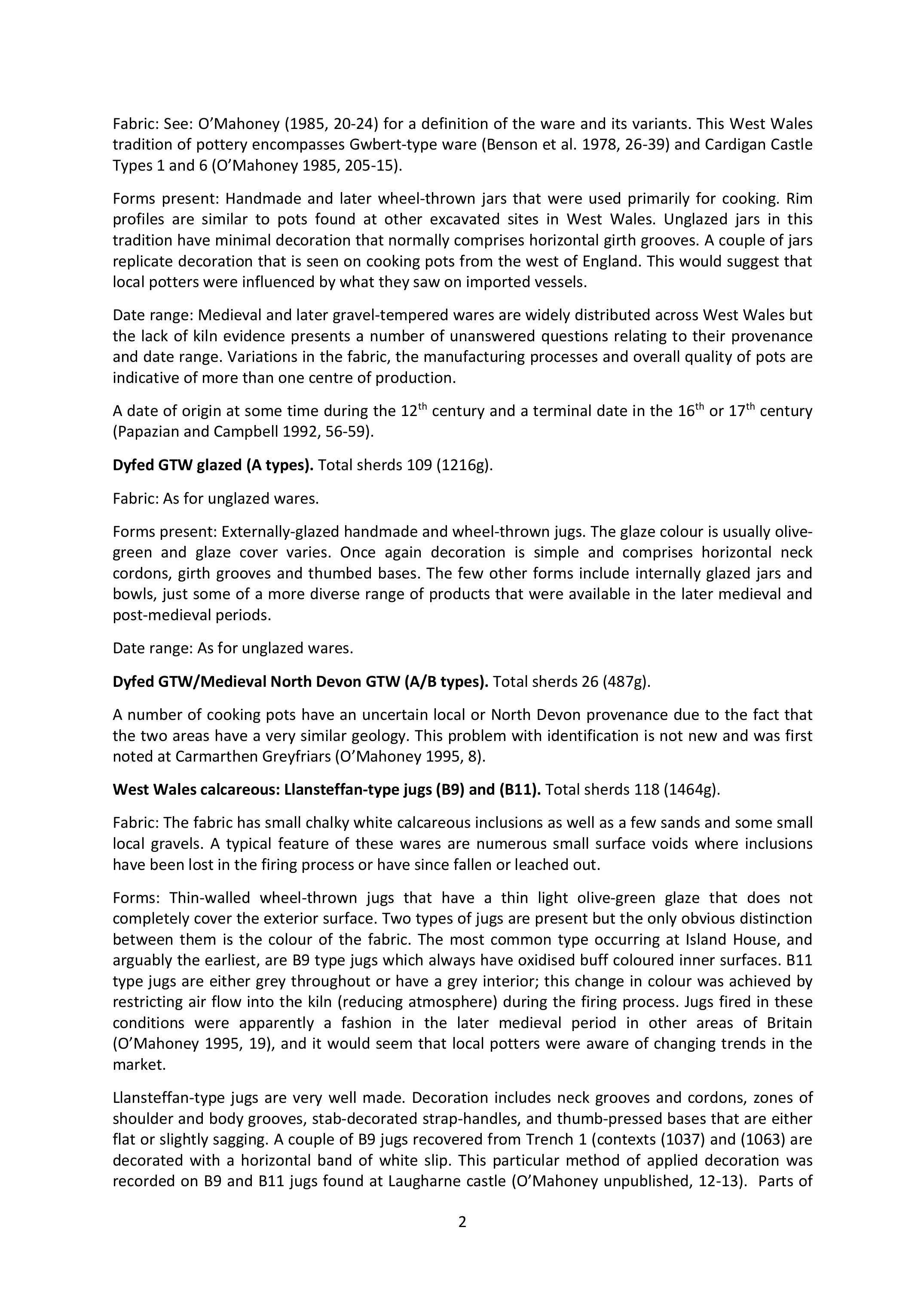
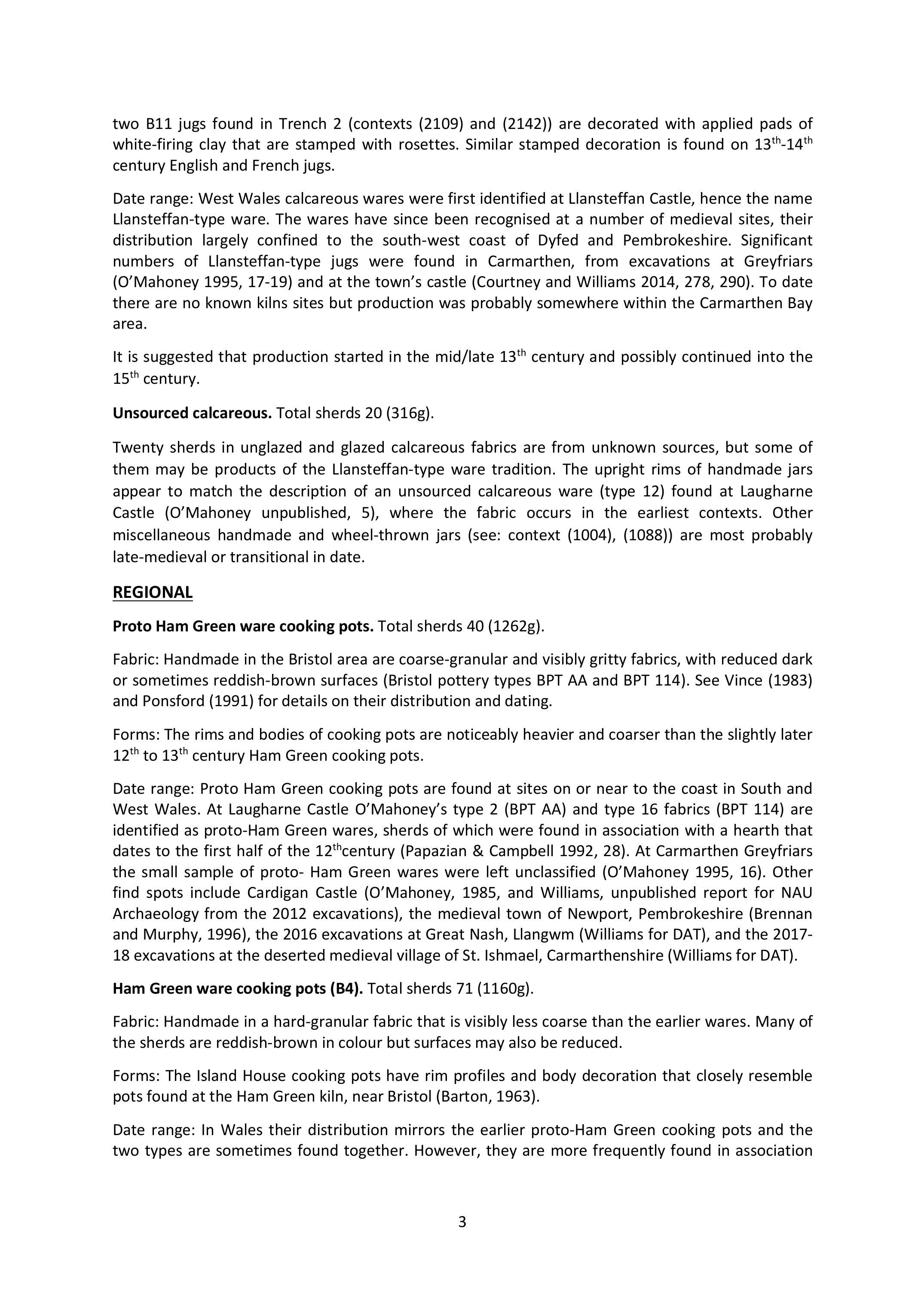
Most of it was made locally, in West Wales: cooking pots and jugs, including well-made jugs of a type first identified at Llansteffan Castle and probably made somewhere around Carmarthen Bay.
A good share came from Bristol (Ham Green and Redcliffe wares) and the West of England (Wiltshire, Bath and probably North Devon). A few pieces came from France, among them jugs from Saintonge in the south-west. The report says these probably all arrived by ship up the Bristol Channel.
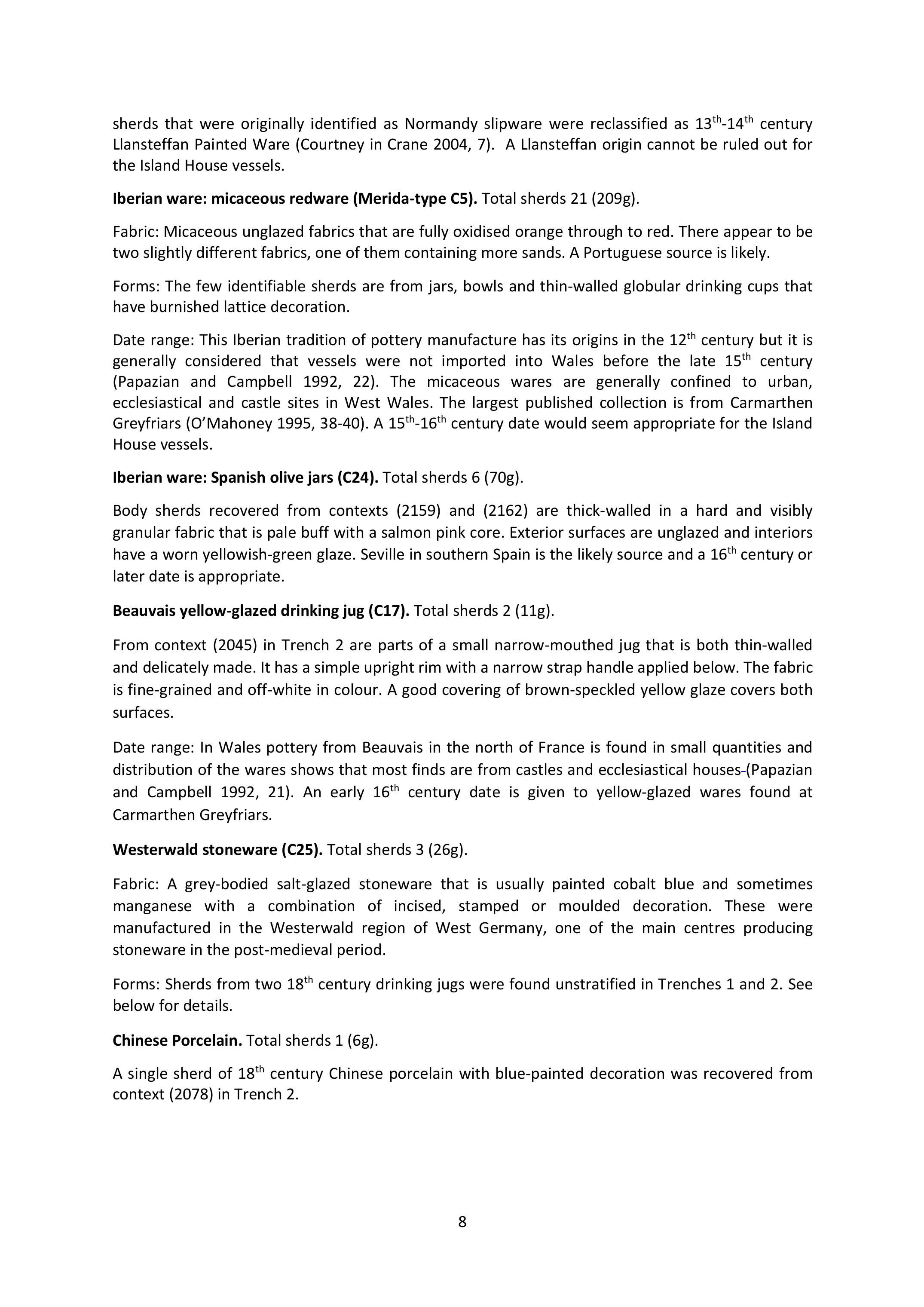
The later layers run from the 1500s to the 1800s: North Devon kitchen and dairy bowls, Spanish olive jars, a small Beauvais drinking jug from northern France, German stoneware, and one piece of 18th-century Chinese porcelain.
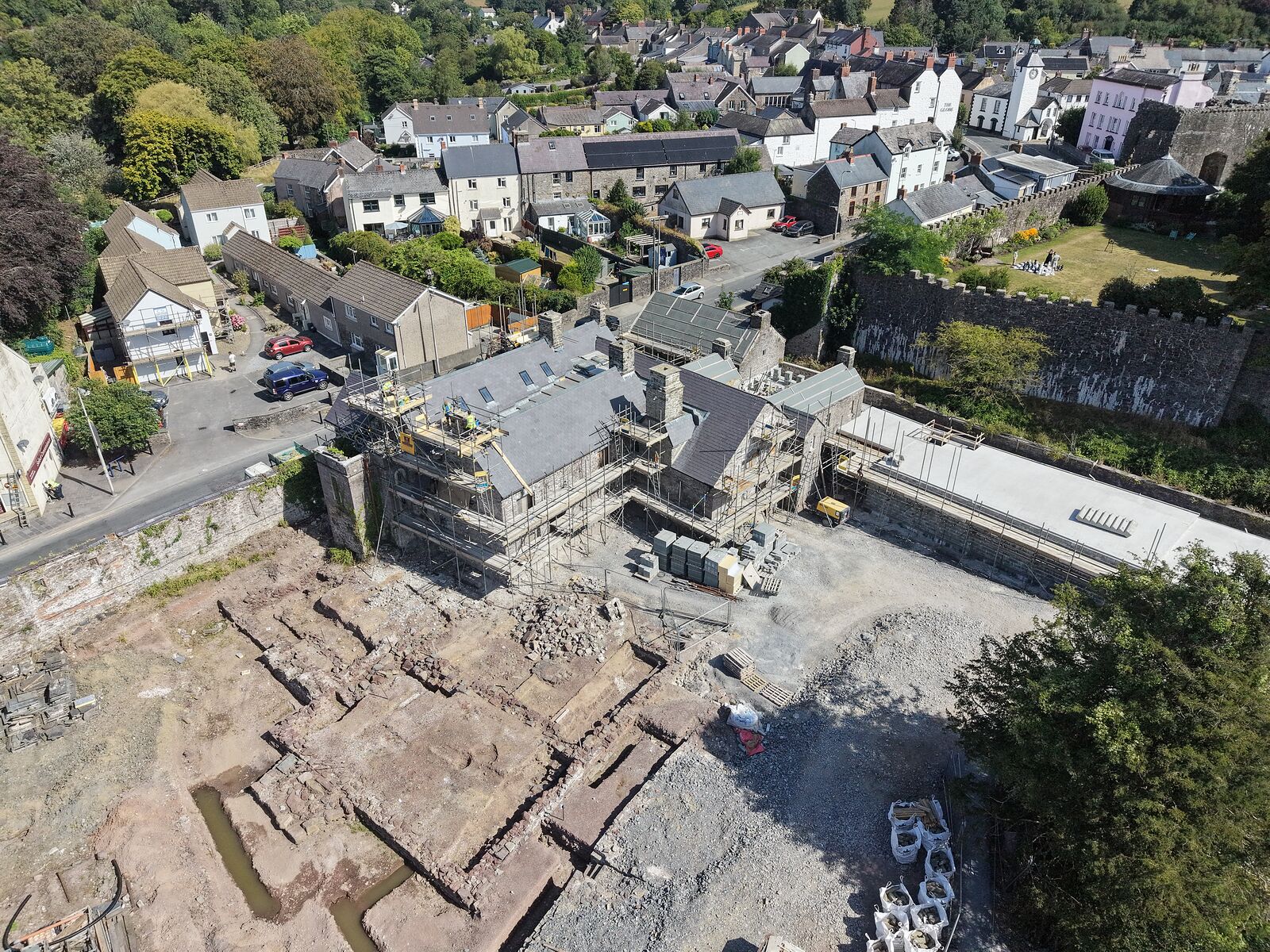
The mix matches the pottery found at Laugharne Castle, and the report suggests that much of the medieval pottery, from Trench 1 especially, came from the castle.
Words used: a fabric is a type of pottery, named for the clay and where it was made. A context is one numbered layer or feature in the trench, written in brackets, such as (1089). This is the 2020 interim report; the dating may be revised in Heneb’s final report on the 2020 and 2025 seasons.
The report
Click any page to read it full size. Shown here are the eight pages of written report; the full PDF (48 pages) adds the layer-by-layer catalogue. The references are a separate PDF.