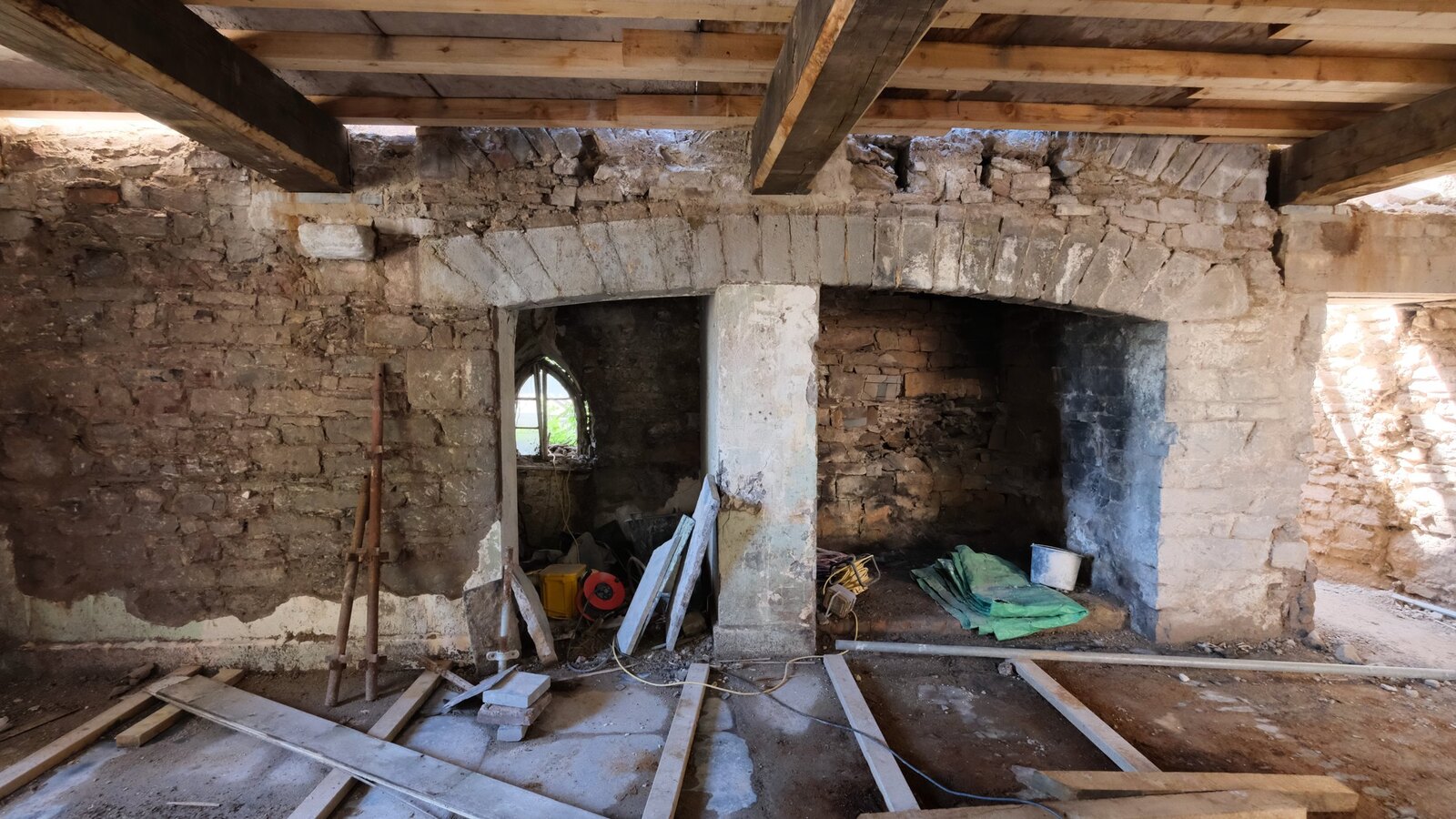
A pointed Gothic window beside a stone hearth inside Island House.

Dyfed Archaeological Trust

Ceramic Building Material

Home › Reports › Ceramic Building Material

These are the 2020 interim reports. Heneb’s analysis of the 2020 and 2025 excavations has since revised their interpretation, and the final report is being prepared. Read them as a record of the first season, not the current account.

Ceramic Building Material Report: the 2020 excavations. Dyfed Archaeological Trust, January 2021.

What this report tells us

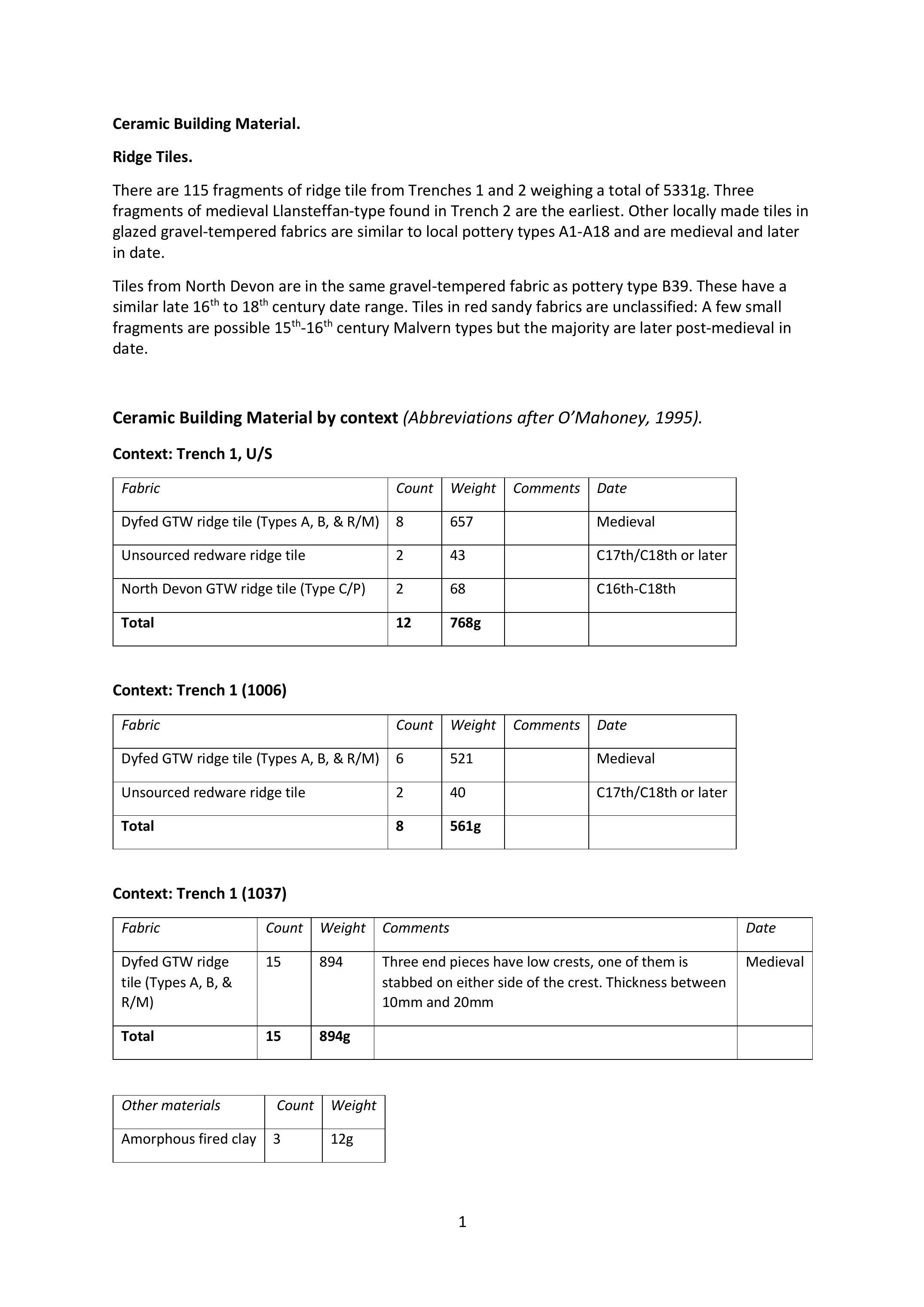
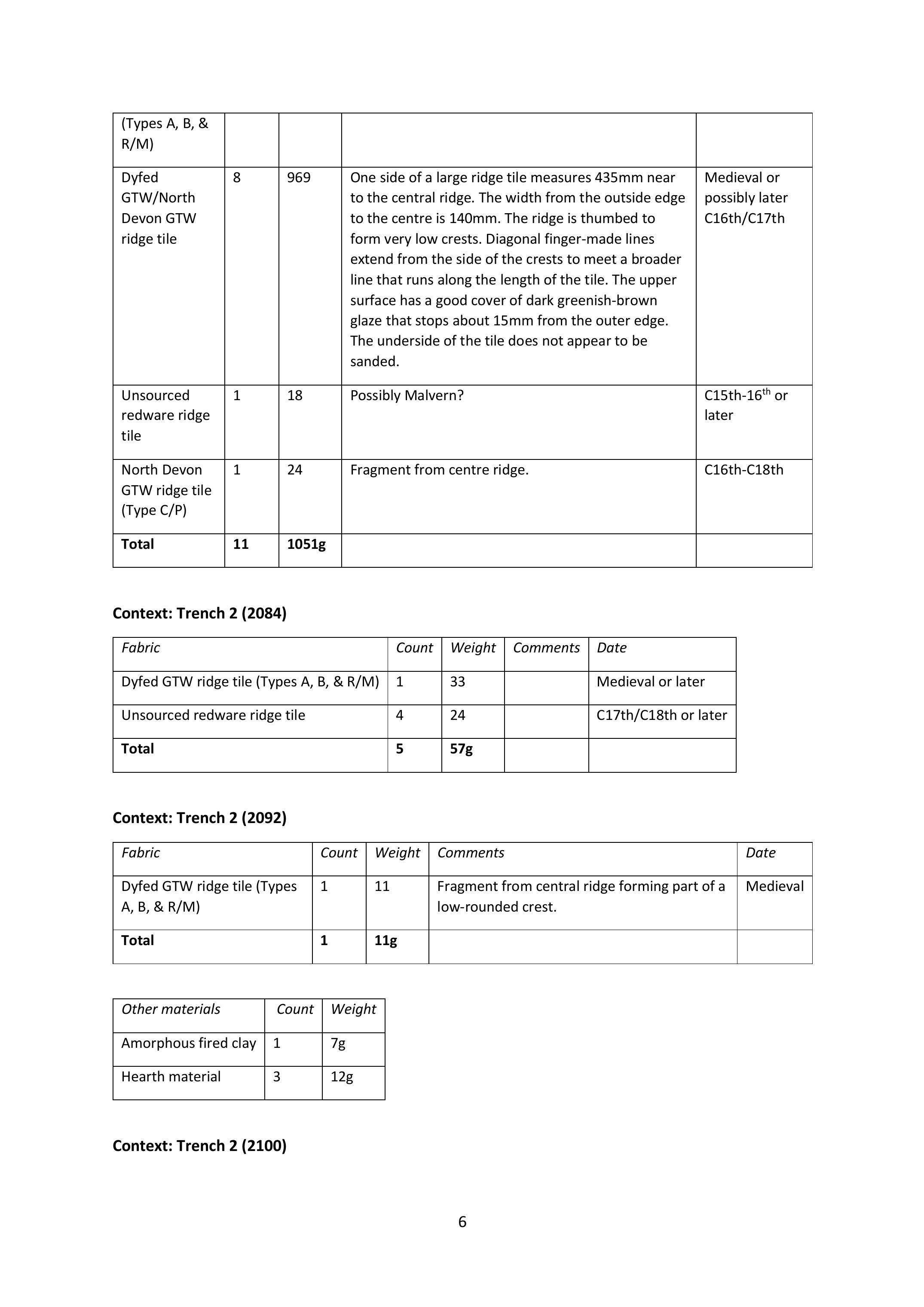
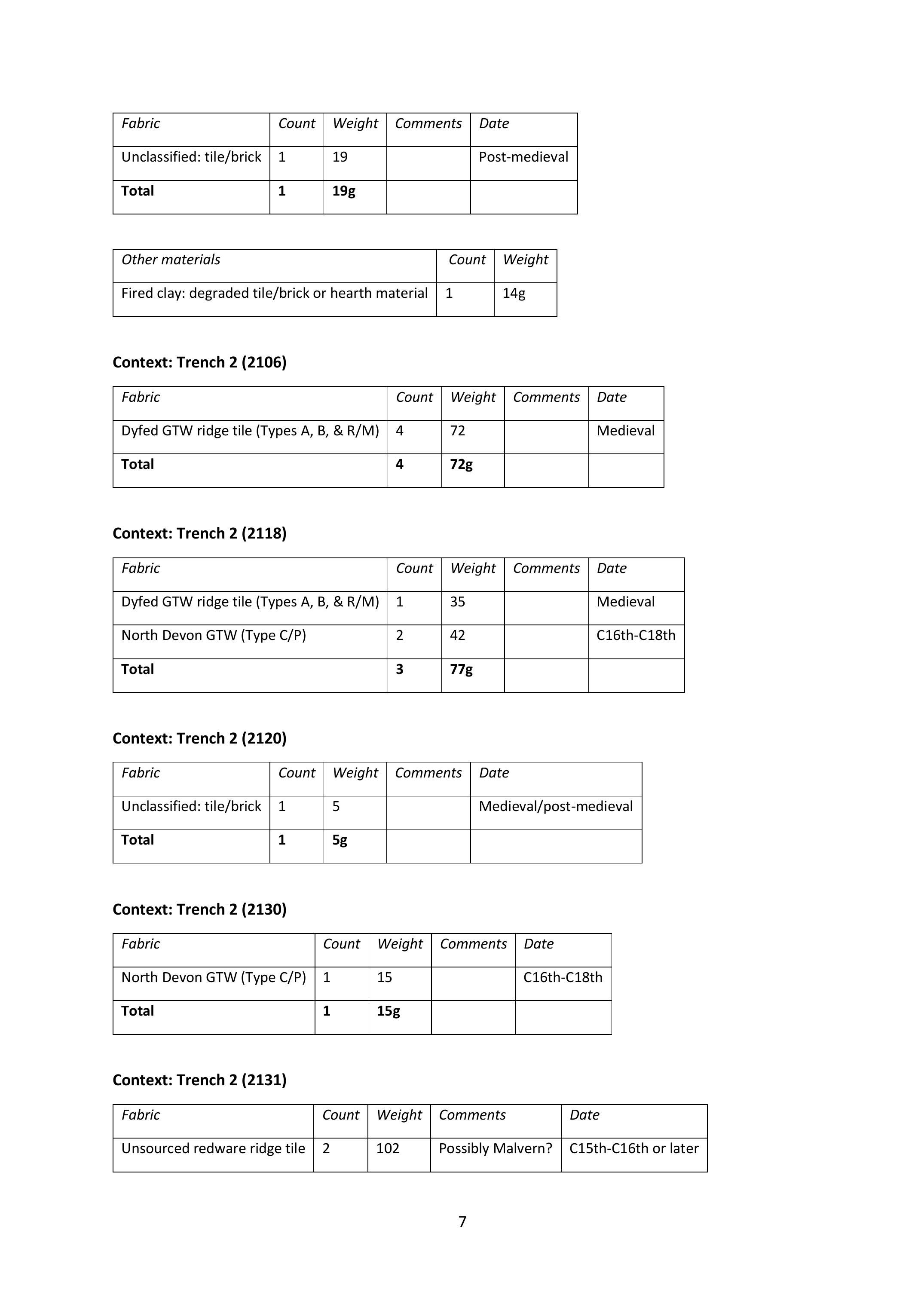
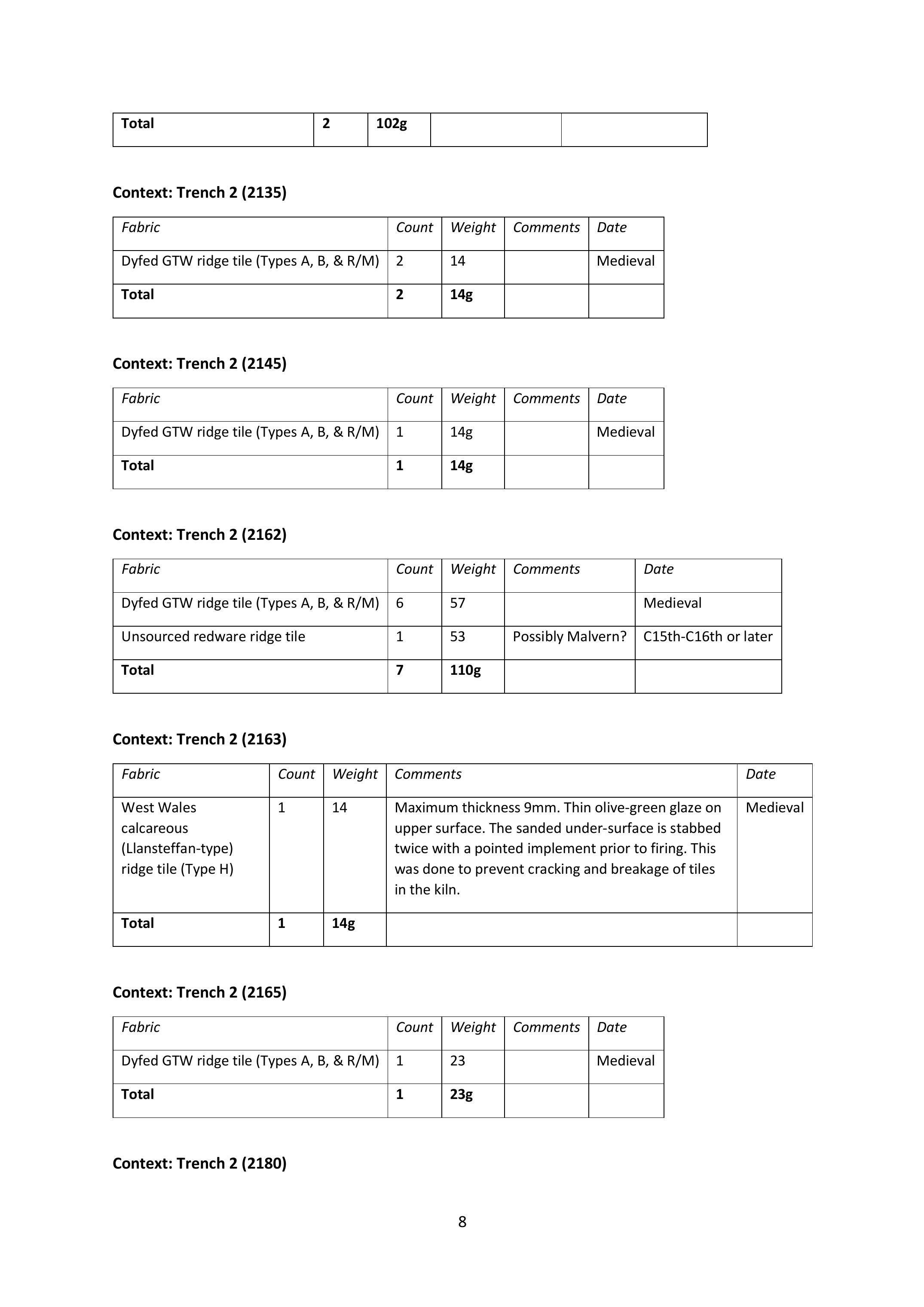
  • “Ceramic building material” means fired-clay parts of buildings. Here it is all ridge tile: the curved tiles that cap the ridge of a roof.
  • The two trenches produced 115 pieces, weighing 5.3 kilograms.
  • The earliest are three medieval pieces of Llansteffan-type tile, from Trench 2. Other locally made glazed tiles are medieval and later.
  • Tiles from North Devon date from the late 1500s to the 1700s. A few red sandy tiles may be from Malvern in the 1400s or 1500s, but most of those are later.
  • So ridge-tiled roofs stood on or near this plot from the Middle Ages onward.

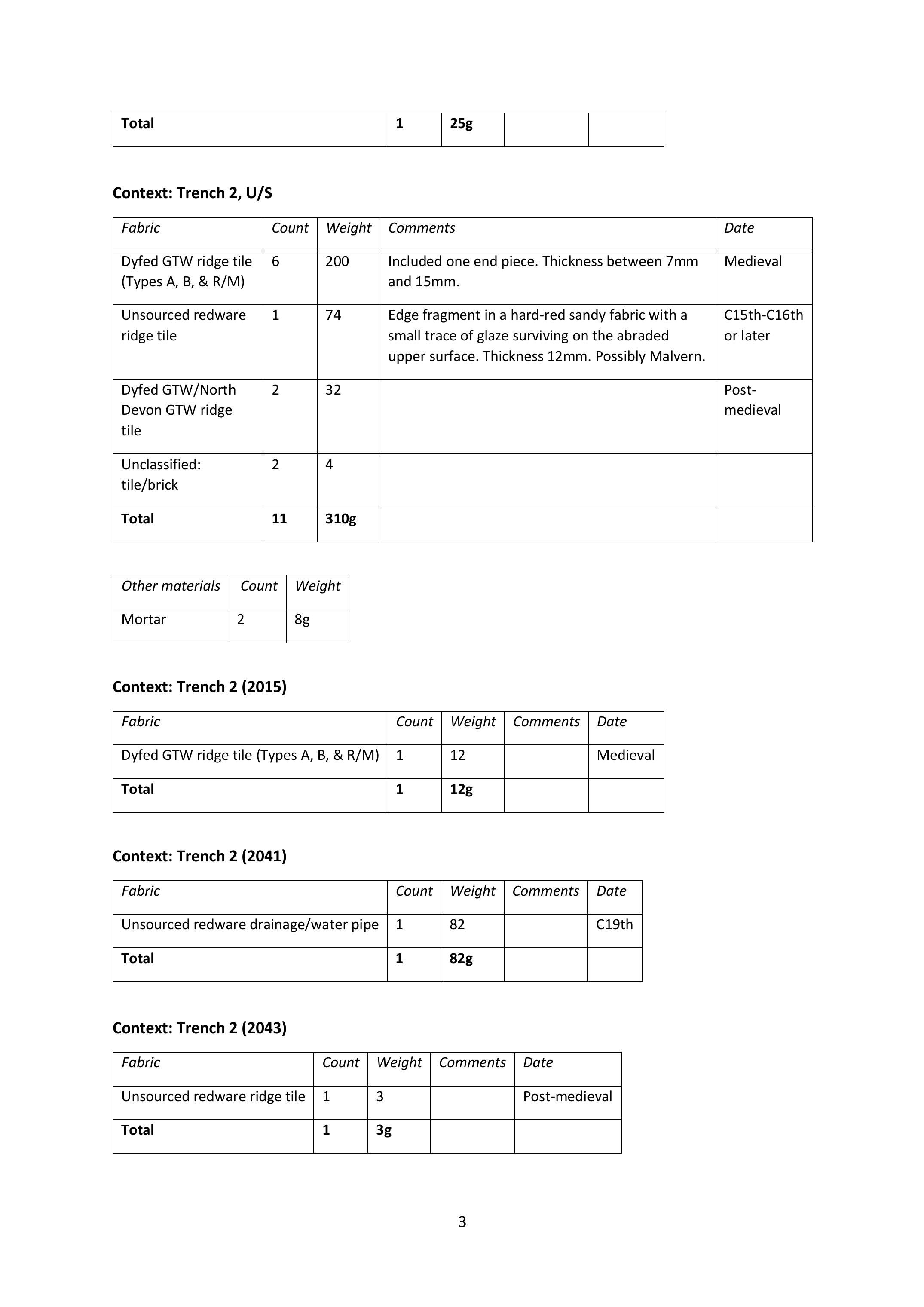
Page 1 is the summary; the following pages list the tiles layer by layer. This is the 2020 interim report.

The report

Click any page to read it full size.
The Ceramic Building Material report, page 1.
Page 1
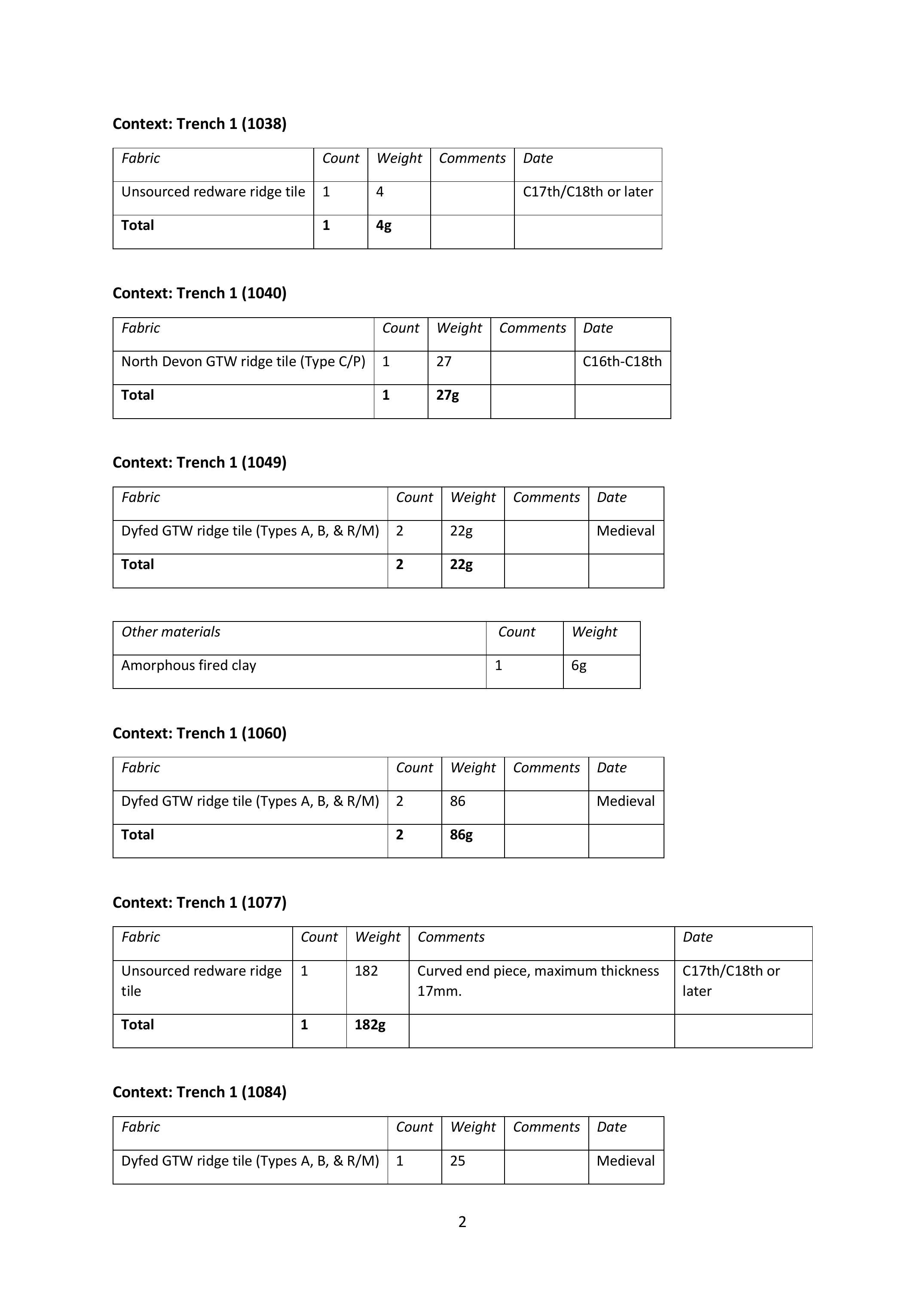
The Ceramic Building Material report, page 2.
Page 2
The Ceramic Building Material report, page 3.
Page 3
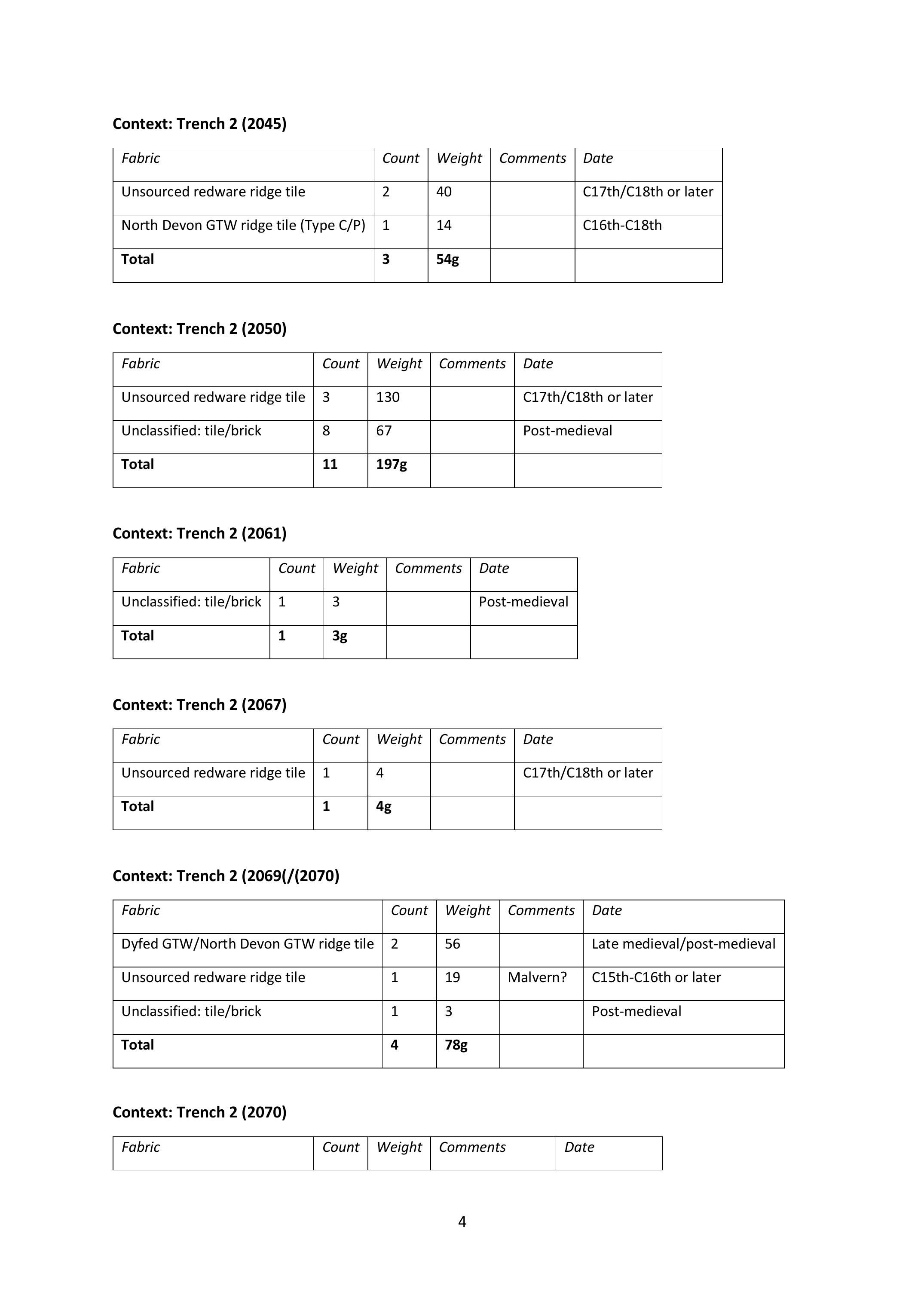
The Ceramic Building Material report, page 4.
Page 4
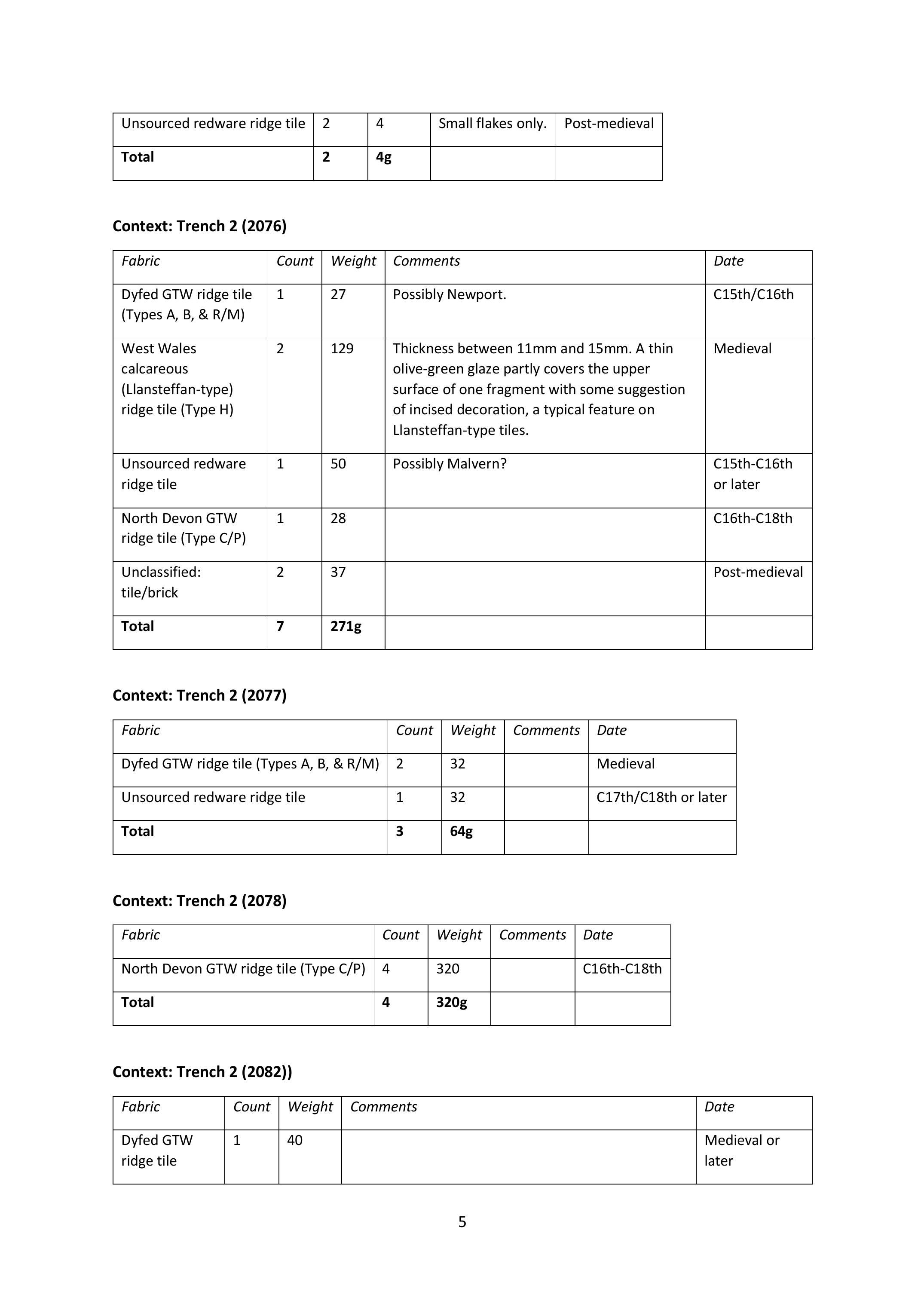
The Ceramic Building Material report, page 5.
Page 5
The Ceramic Building Material report, page 6.
Page 6
The Ceramic Building Material report, page 7.
Page 7
The Ceramic Building Material report, page 8.
Page 8
The Ceramic Building Material report, page 9.
Page 9