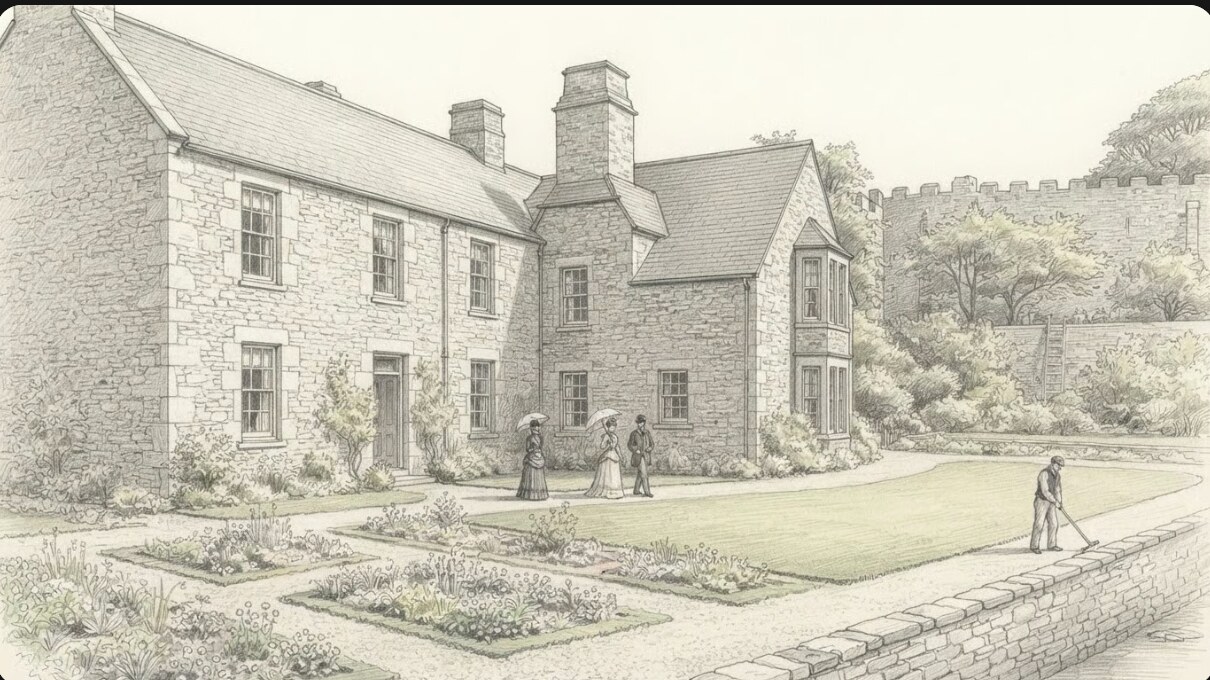
The people of the house
The people of the house
Home › Owners & People
Their record
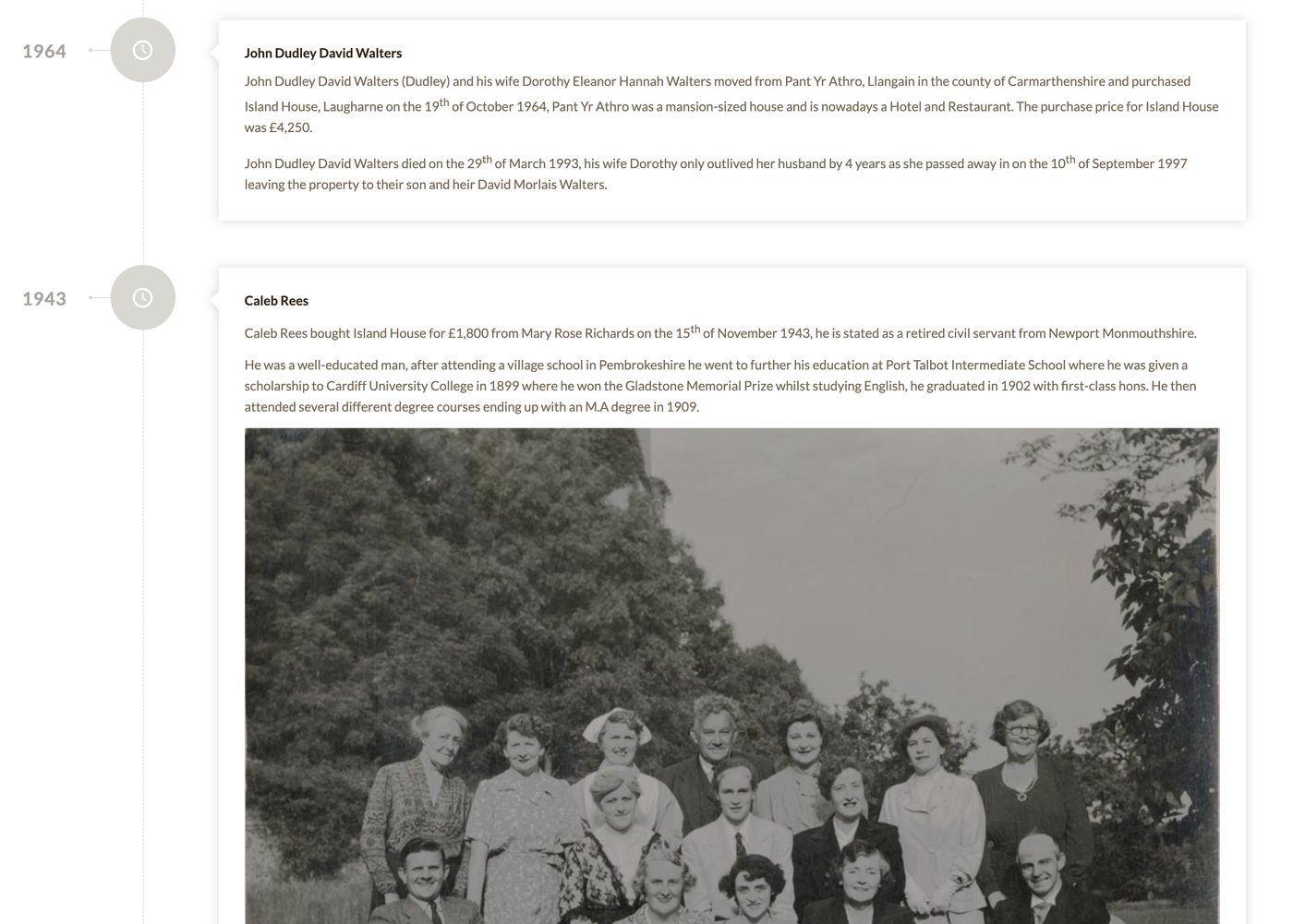
Island House Restoration Ltd traced the owners and people who lived in Island House from 1778 to the present day, from factual sources, working without access to local archive services during lockdown. Their record begins in 1778.
What our research adds
William Skyrme (1778–1823) was born and died at Island House and was Portreeve of Laugharne (1801, 1802, 1817). The Skyrmes were marine-supply merchants; their 65-ton sloop, the William Skyrme, appears in Lloyd's Register — the living link from the medieval quay to a working Georgian business.
The house passed through the town's leading families — the Whites (14th-century landholders, possible original builders), the Prydderchs, the Thomases and the Hughes — down to Jane Abra Hughes, sole heiress, who carried Island House to the Skyrmes. The boundary wall still bears a plaque: "rebuilt by Maryabra Hughes Skyrme AD 1837."
Drawn from the evidence
Of everyone who has lived at Island House, Mary Abra Hughes Skyrme is the one who wrote her own name into its fabric. The plaque she set in the boundary wall in 1837 is still there, and it is her signature on the building.
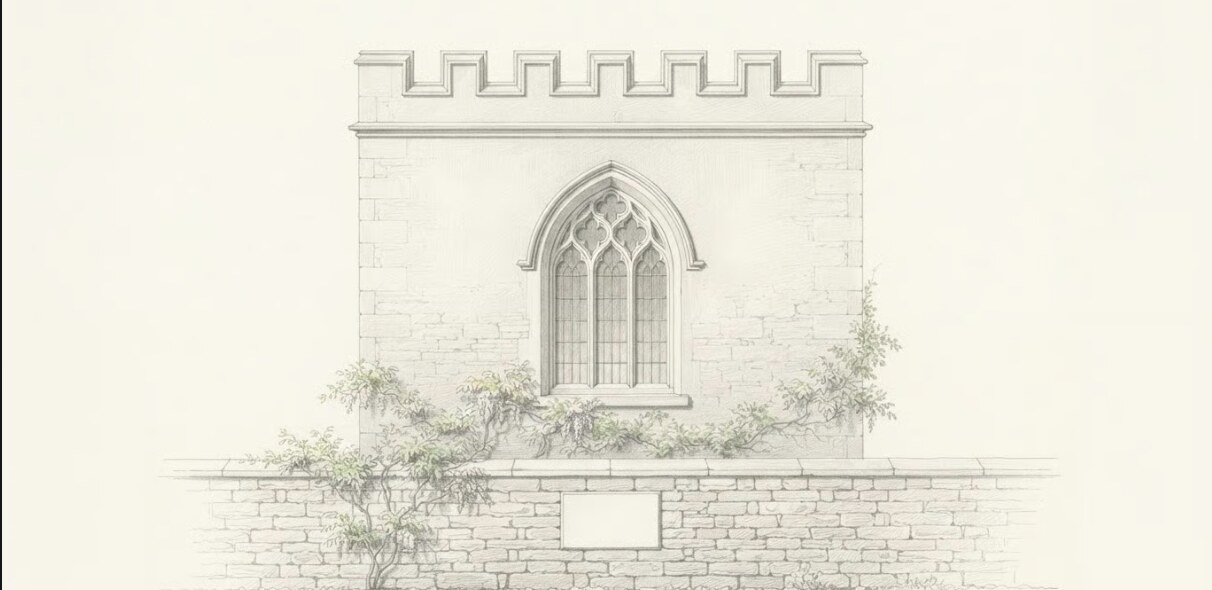
The Gothick dressing — the castellated parapet and pointed Gothic window (F23) and the ornamental gate tower are an eighteenth- to nineteenth-century Picturesque Revival echoing the castle: decorative, not medieval defence and not fortification. The boundary wall below carries the plaque recording its rebuilding by Mary Abra Hughes Skyrme in 1837; the plaque is left blank in the drawing.
An evidence-based reconstruction drawing, not a photograph. The structure follows Island House’s surviving fabric (the building record) and the archaeology; the fire, furnishings, figures, boats and planting are informed reconstruction. Where the record is silent we have said so.
One of six drawings made for The Rooms, As They Were.
The town they knew
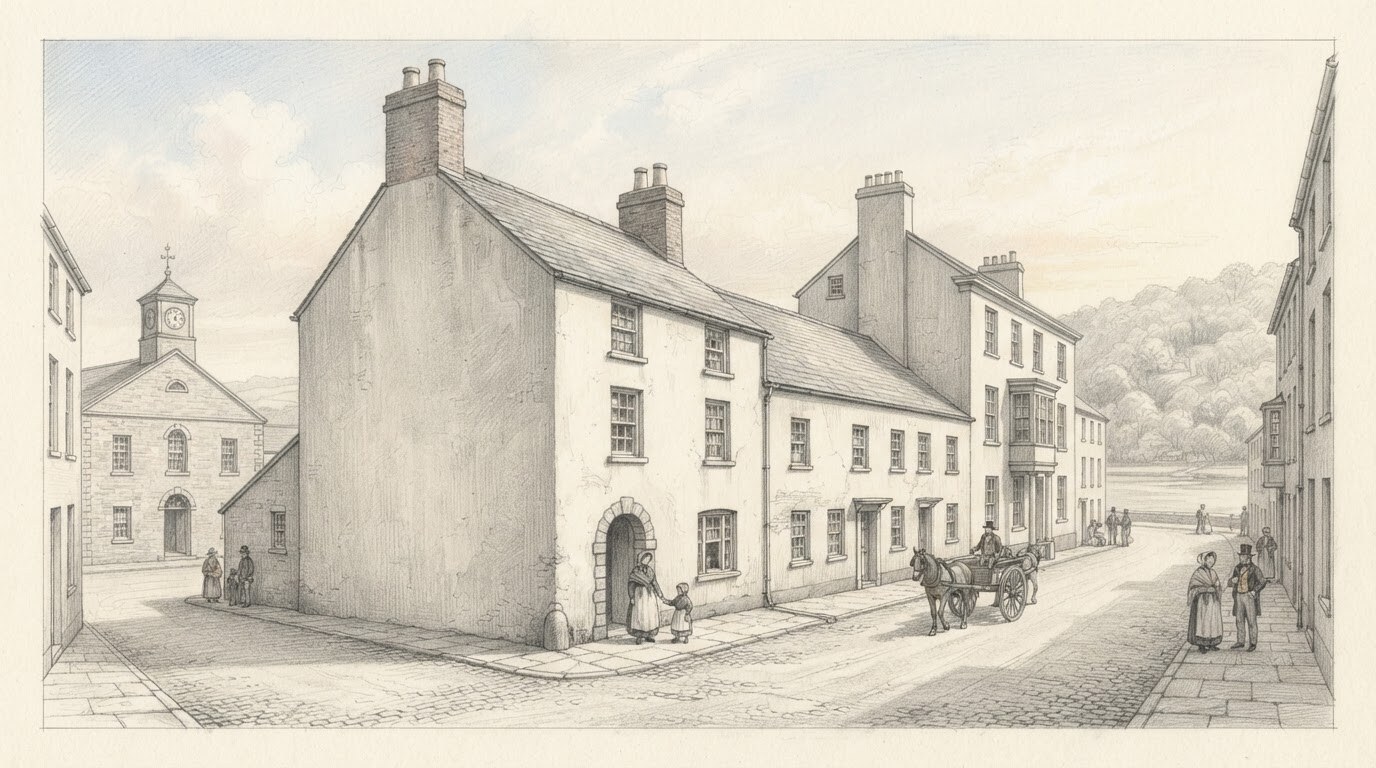
The town the Skyrmes knew — whitewashed frontages along the street, with the estuary beyond. This is an informed reconstruction of the period’s townscape rather than a record of a particular view: no individual building here is identified, and Island House itself is not in the picture. It is here to place the family in their town.
An evidence-based reconstruction drawing, not a photograph. The period and the character of the townscape are informed by the record; the buildings, figures and street are reconstruction. Where the record is silent we have said so.
In the 20th century Caleb Rees, Deputy Chief Inspector of Schools for Wales, lived here 1943–70; his wife Dr Laura Powell was Medical Officer to the Welsh Board of Health.
Note: the long-repeated claim that Bridget "Madam" Bevan lived at Island House is unsourced and is not carried as fact.